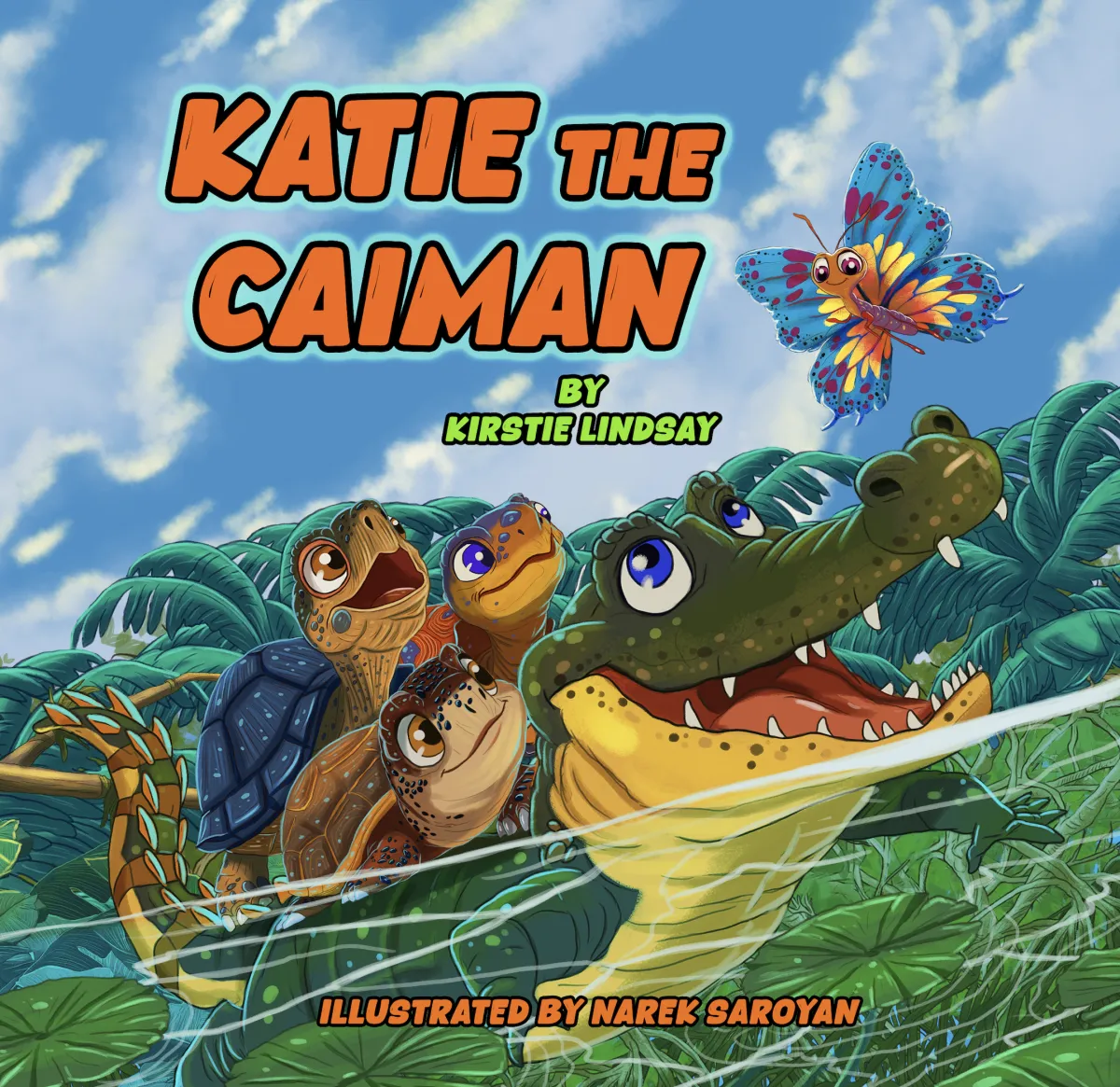
Katie the Caiman Resources
As a speech-language pathologist, I use books in all my therapy sessions to target a variety of therapy goals.
Books are powerful tools because they engage children in a natural context and give children a much-needed reprieve from screen time.
While writing Katie the Caiman, I thought about three main areas of focus for my fellow therapists, educators, and parents – areas that could help a child to improve their reading skills as well as their communication and problem-solving abilities.
What to expect
Every two weeks, I will discuss and address these three main themes on my website. I’ll provide an explanation of each area (including a video) along with resources for educators and parents. In addition to specific activities and information that an educator or therapist can use with students, I’ll include “on-the-go” activities that a parent can easily incorporate into everyday routines, such as driving in the car or waiting in line at the grocery store.
The three areas and skills are as follows:
Reading (phonological awareness)
1. Rhyme/segmentation
2. Syllables
3. Sound identification
Language
1. Expressing Yourself
2. Understanding language
3. Social Language
Problem-Solving
1. Identifying problems
2. Solving problems
3. Making decisions
You will be notified via email when resources are released! Join the email list to be notified.
If you have any questions or concerns, please reach out via email at [email protected].
Thanks for joining me on this adventure!
Katie the Caiman Literacy Skills
What is Phonological Awareness?
Phonological awareness refers to a child’s ability to hear and play with sounds in their spoken language. Activities that foster this ability include recognizing and producing rhyming words, breaking down words into syllables/individual sounds and identifying specific sounds within words.
Why is Phonological Awareness important?
Research shows that phonological awareness is the key indicator of future reading and spelling success. Children who develop these skills early in life become more proficient at reading throughout their school years.
“Phonological awareness is more closely related to reading success than intelligence.” (Torgeson, 1997).
What have I noticed as a speech-language pathologist?
Some children learn how to read by memorizing letters and sounds, but they don’t acquire the foundational phonological awareness skills. I often observe these students struggling to read and sound out words as they reach Grades 1, 2, and 3 and the words become more complex. When I work with these students and determine that they are weak in phonological awareness, I address the problem by focusing on rhyming, segmenting, syllable detection, and sound identification skills. Once these skills improve, there is often a direct correlation with reading success!
*If you and/or your child’s teacher have significant concerns about your child’s reading ability, please consider a formal reading assessment, performed by a professional such as an Educational Psychologist.
Rhyming and Segmenting Activities
This video:
Talks about rhyme exposure
Demonstrates a multimodal approach to teaching rhyme
Demonstrates a hierarchy for teaching rhyme
Demonstrates how to use the Turtle Cards with activities
Demonstrates how to target segmenting and rhyme while on the go
Syllables Activities
This video:
Explains the importance of syllable awareness for reading proficiency and vocabulary expansion
Demonstrates a multimodal approach to teaching syllables that is not the typical clapping method
Demonstrates a hierarchy for teaching syllable identification, as well as adding and deleting syllables
Demonstrates how to use the Jungle Cards with syllable activities
Demonstrates how to target syllables while on the go
Phonemic Awareness Activities
This video:
Explains what phonemic awareness is and why it is essential for early reading success
Demonstrates how to teach children to identify and produce individual sounds in words
Models segmenting, adding, deleting, and manipulating sounds
Incorporates print alongside listening activities to strengthen sound–symbol connections
Shows practical ways to target phonemic awareness skills during everyday routines
WH Questions and Activities
This video:
Explains what WH questions are and why they are important for communication and learning
Shows how WH questions develop as children grow
Demonstrates how WH questions build vocabulary and thinking skills
Provides simple ways to practice WH questions while reading and during daily routines
Shares strategies to help children who have difficulty answering WH questions
🐊 WH Wheel 🐊
Conversational Turns Activities
This video:
Explains what conversational turns are and why they are important for language and brain development
Demonstrates how back-and-forth interactions support communication, thinking, and reading skills
Highlights how conversational turns can be used from early communication, including babbling
Provides simple ways to build conversational turns during reading, play, and daily routines
Shares engaging strategies and activities to encourage more back-and-forth interaction with children