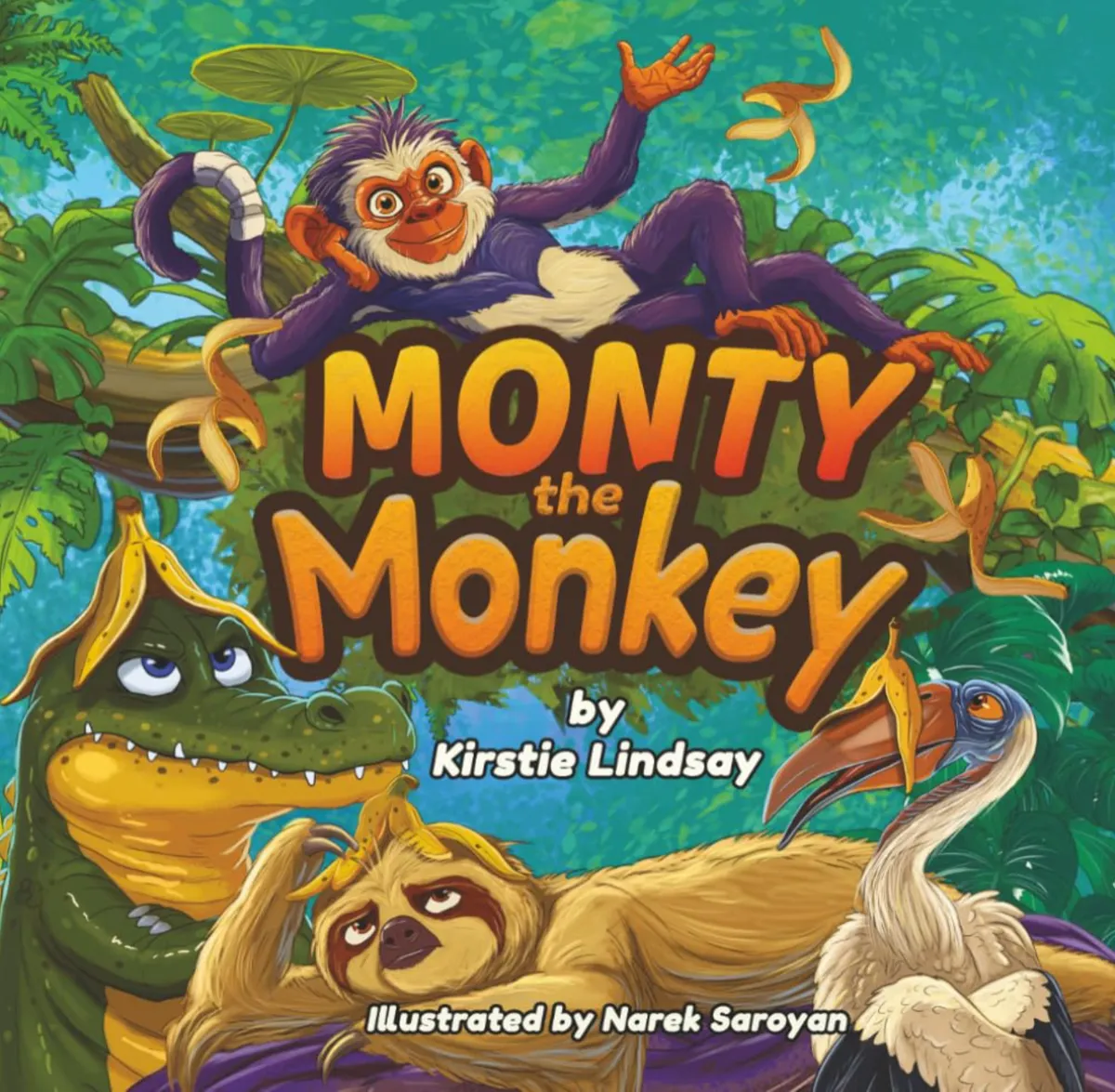
Monty the Monkey Resources
Keep the adventure going with simple activities to support your child’s reading, communication and social skills.
At the end of Monty the Monkey, you’ll find a page called Extension Activities for Monty the Monkey. Watch the videos below for demonstrations of the activities you can do with your child while reading the story or engaging in everyday routines.
Welcome to Monty the Monkey Resources
Join Kirstie for an introduction to the extension activities and the three areas they support: early literacy, language and problem solving/social skills.
This video:
Introduces the three areas of focus.
Explains how to use the activities alongside the story.
Shares ways to practice while reading, riding in the car, or waiting in line.
If you have any questions or concerns, please reach out via email at [email protected].
Thanks for joining me on this adventure!
Phonological Awareness
This video helps your child identify and manipulate individual sounds in words. It provides a higher level phonological awareness activity that correlates with reading ability by accomplishing the following:
Demonstrating the process of identifying and moving sounds in words (e.g. sloth → slop → flop → flap)
Exploring the meaning of each new word
Explaining how to increase the difficulty of the task by removing visual aids
Language
This video promotes conversational turns by providing a thought provoking question that will help improve your child's vocabulary, comprehension, and problem solving skills. It targets the following goals:
Explaining conversational turns
Using Monkey Preschool to encourage questions and discussion
Showing how illustrations can help children think of ideas
Connecting Monty’s school day with your child’s own experiences
Sharing questions you can revisit during everyday routines
Problem Solving/Social Skills
How can we tell what someone is feeling without hearing them speak? Play Emotion Detectives to help your child notice clues in facial expressions and body language. The video targets the following goals:
Connecting Monty’s experiences with how people express emotions
Demonstrating a game of acting out and guessing feelings
Encouraging children to express the clues they notice
Showing how a mirror can help children explore their own expressions
Building opportunities to talk about feelings and take turns